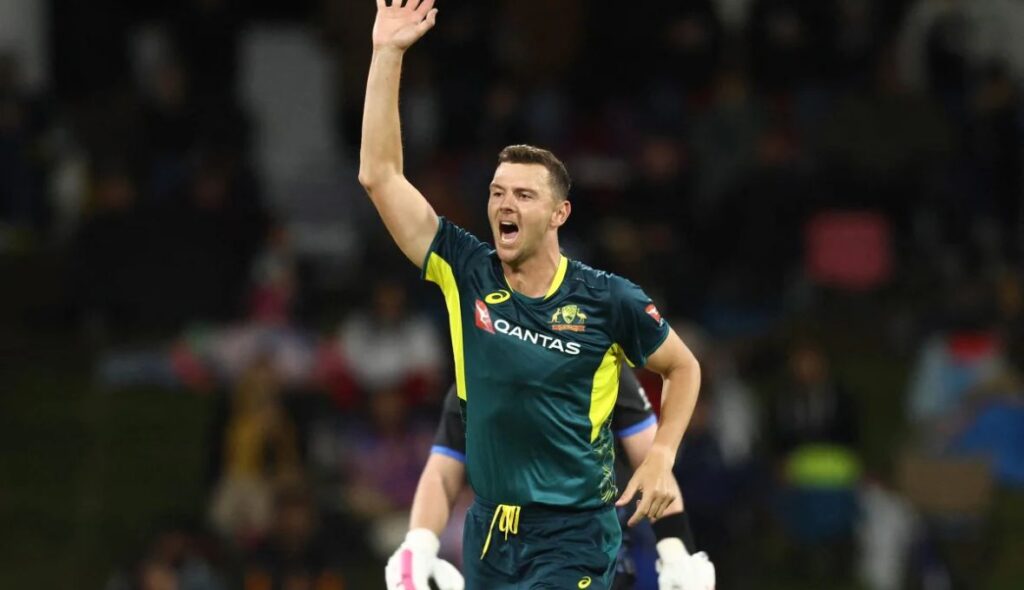

Australia’s preparations for the ICC T20 World Cup have suffered a significant setback, with senior fast bowler Josh Hazlewood ruled out of the early stages of the tournament due to an ongoing Achilles injury. The experienced pacer will continue his rehabilitation in Sydney, delaying his return to competitive action at a time when Australia’s fast-bowling unit has already been stretched by injuries.
In response, Australia have added Sean Abbott as a reserve option, ensuring cover for a pace attack that has been battling fitness concerns in the build-up to the global event.
This development raises important questions about Australia’s bowling balance, workload management, and tactical planning as the T20 World Cup approaches.
Australia’s Injury Woes Continue Ahead of T20 World Cup
Australia’s fast-bowling depth has long been a major strength across formats. However, injuries have tested that depth in recent months, with several frontline quicks managing niggles or recovery programs.
Josh Hazlewood’s delayed return adds to these concerns. While the injury is not considered long-term, missing the opening phase of a World Cup is far from ideal—especially for a bowler who plays a crucial role in Australia’s powerplay and death-over strategies.
Josh Hazlewood’s Achilles Issue: What We Know
Hazlewood has been dealing with an Achilles-related problem, a sensitive injury for fast bowlers due to the repeated impact and load generated during delivery strides.
Why Achilles Injuries Are Tricky for Fast Bowlers
- High stress on the lower limb during run-up and delivery
- Risk of recurrence if rushed back
- Requires careful workload management
- Often demands extended rehabilitation rather than match fitness
Cricket Australia’s medical team has opted for caution, prioritising long-term fitness over short-term gains.
Rehabilitation in Sydney: A Cautious Approach
Rather than travel with the squad immediately, Hazlewood will remain in Sydney to continue his rehabilitation under close medical supervision.
Why This Decision Makes Sense
- Controlled training environment
- Ability to monitor workload precisely
- Reduced travel-related stress
- Better chance of returning at full fitness later in the tournament
Australia are hopeful that Hazlewood could still feature in the later stages of the T20 World Cup, provided his recovery progresses as planned.
Hazlewood’s Importance to Australia’s T20 Plans
Josh Hazlewood is not just another fast bowler in Australia’s setup—he is a cornerstone of their white-ball strategy.
What Hazlewood Brings to the Side
- New-ball control with pace and bounce
- Ability to hit hard lengths consistently
- Proven record against top-order batters
- Calm execution under pressure
His absence in the early matches forces Australia to rethink their bowling combinations.
Sean Abbott Added as Reserve: What It Means
With Hazlewood unavailable initially, Australia have added Sean Abbott as a reserve option to bolster their fast-bowling resources.
Abbott’s inclusion reflects his versatility and experience in T20 cricket, particularly in high-pressure situations.
Why Abbott Is a Logical Choice
- Proven domestic and international performer
- Effective in both powerplay and death overs
- Handy lower-order batting option
- Familiar with Australian team environment
As a reserve, Abbott provides depth rather than a guaranteed starting role—but his presence could prove vital if injuries persist.
Sean Abbott’s T20 Credentials
Sean Abbott has built a reputation as a dependable seam-bowling all-rounder.
Strengths Abbott Offers
- Variations suited for T20 cricket
- Strong slower balls and cutters
- Ability to contribute with the bat
- Experience across different conditions
While not a like-for-like replacement for Hazlewood, Abbott adds flexibility to Australia’s options.
Australia’s Fast Bowling Unit Under Pressure
Hazlewood’s delayed return highlights a broader issue—Australia’s fast-bowling workload management across formats.
Challenges Facing the Pace Attack
- Packed international calendar
- Franchise cricket commitments
- Managing injury-prone fast bowlers
- Balancing rest with match readiness
The team management must now ensure that the remaining bowlers are not overworked during the tournament’s opening phase.
Tactical Impact: How Australia May Adjust Early On
Without Hazlewood, Australia may need to adapt their bowling plans in the initial matches.
Possible Tactical Adjustments
- Increased reliance on swing and seam bowlers
- Using spinners earlier in the powerplay
- Sharing death-over responsibilities
- Rotating bowlers to manage workload
Such flexibility will be key in navigating the early group-stage fixtures.
Early Matches: A Crucial Phase Without Hazlewood
The early stages of a T20 World Cup often shape a team’s momentum. Missing a bowler of Hazlewood’s calibre could influence Australia’s results, especially against strong batting line-ups.
However, Australia have depth and experience, and this phase also presents an opportunity for others to step up.
Who Could Fill the Void Temporarily?
Several Australian bowlers may be asked to shoulder additional responsibility.
Potential Beneficiaries of Hazlewood’s Absence
- Younger pacers gaining big-tournament exposure
- All-rounders contributing extra overs
- Spinners playing a more prominent role
Such situations often unearth new match-winners.
Risk vs Reward: Managing Hazlewood’s Comeback
Rushing Hazlewood back could jeopardise both the tournament and his long-term career. Australia appear determined to avoid that mistake.
Why Patience Is Key
- Knockout stages demand peak fitness
- One injury setback could rule him out entirely
- Experienced bowlers are most valuable late in tournaments
A fully fit Hazlewood in the latter stages could be far more impactful than a half-fit version early on.
ICC T20 World Cup: A Tournament of Fine Margins
In T20 cricket, small details often determine outcomes. Bowling discipline, especially in the powerplay and death overs, is critical.
Hazlewood’s absence affects:
- Early wicket-taking potential
- Containment strategies
- Psychological pressure on opposition batters
Australia must compensate collectively rather than rely on one individual.
Historical Context: Australia and Injury Challenges in ICC Events
Australia have previously navigated ICC tournaments with injury concerns.
Past Lessons
- Squad depth is essential
- Flexibility in roles brings success
- Timely returns of key players can change tournaments
These experiences will inform Australia’s approach in the current campaign.
What This Means for Australia’s Title Ambitions
Australia remain strong contenders, but Hazlewood’s delayed return adds an element of uncertainty.
Factors Still in Australia’s Favour
- Balanced squad across departments
- Experienced leadership group
- Proven performers in big tournaments
- Ability to adapt tactically
If Hazlewood returns fit and firing later in the competition, Australia’s prospects could improve significantly.
Fans React: Concern but Optimism
Australian fans have expressed concern about Hazlewood’s injury but also trust in the management’s cautious approach.
Many believe that preserving Hazlewood for the business end of the tournament is the smarter long-term strategy.
Medical Management in Modern Cricket
The decision to delay Hazlewood’s return reflects a broader shift in modern cricket.
Changing Attitudes Toward Injuries
- Greater emphasis on player longevity
- Use of sports science and data
- Reduced tolerance for risk
- Focus on peak performance timing
Cricket Australia’s handling of this situation aligns with global best practices.
Could Sean Abbott Play a Bigger Role?
While initially named as a reserve, Abbott’s role could expand depending on circumstances.
Scenarios Where Abbott Could Feature
- Further injuries in the pace unit
- Specific match-up requirements
- Need for batting depth
- Rotational workload management
His readiness ensures Australia are not caught short.
The Road Ahead for Josh Hazlewood
For Hazlewood, the focus remains on recovery and gradual return.
Key Milestones Ahead
- Pain-free bowling workload
- Match simulation sessions
- Clearance from medical staff
- Gradual reintegration into the squad
Only after ticking these boxes will he be considered for selection.
Bigger Picture: Balancing Fitness and Trophies
The T20 World Cup is important—but so is preserving a bowler of Hazlewood’s calibre for future series and tournaments.
Australia’s cautious stance suggests a long-term view rather than tournament-only thinking.
Conclusion
Josh Hazlewood’s delayed return due to an Achilles injury is a setback for Australia, especially as they enter the early stages of the ICC T20 World Cup. His absence underscores the injury challenges faced by Australia’s fast-bowling unit and forces tactical adjustments in the opening phase of the tournament.
The inclusion of Sean Abbott as a reserve provides depth and reassurance, ensuring Australia remain competitive despite the setback. More importantly, the decision to prioritise Hazlewood’s rehabilitation reflects a mature, long-term approach to player management.
If Hazlewood can return fully fit for the latter stages, Australia may yet turn this challenge into an advantage—arriving at the knockout phase with a refreshed, battle-ready spearhead.